

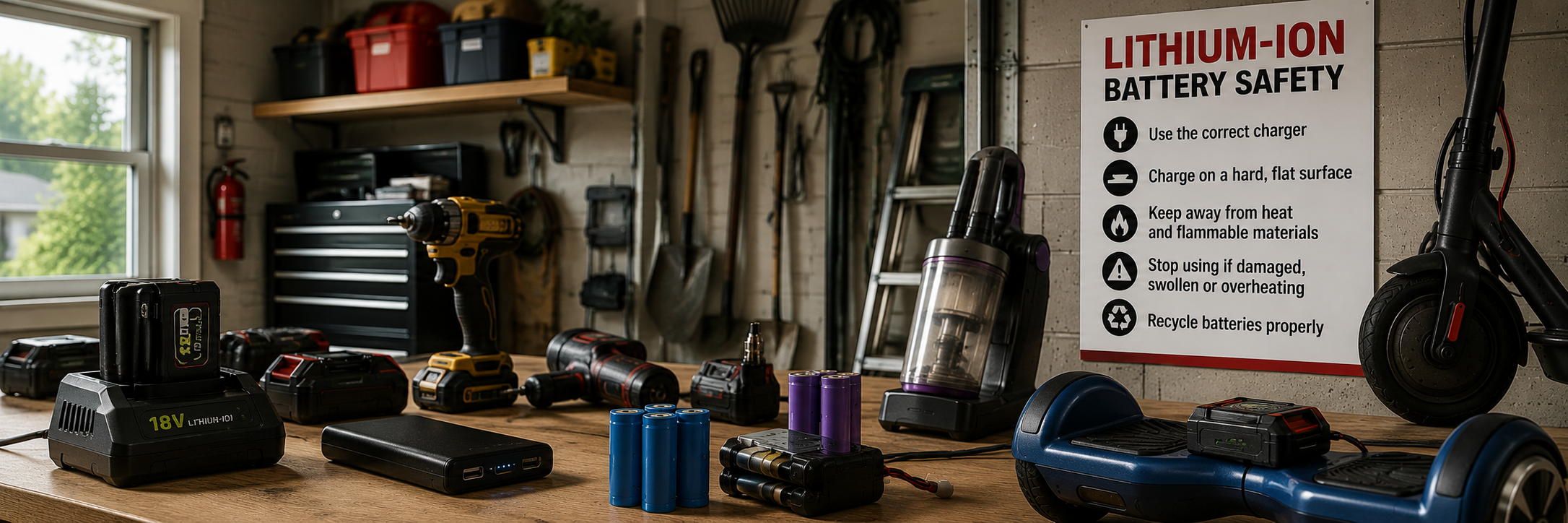
Lithium-Ion Battery Safety
Lithium-ion batteries power many devices we use every day — from smartphones and laptops to e-bikes, power tools, and electric vehicles. While they are generally safe when used properly, lithium-ion battery fires are becoming more common and dangerous due to overheating, damage, or improper charging.
Why Lithium-Ion Batteries Can Be Dangerous
Lithium-ion batteries store a large amount of energy in a small space. When damaged or improperly used, they can overheat, catch fire, or explode. These fires burn extremely hot, release toxic gases, and can reignite even after being extinguished.
Common Causes of Battery Fires
-
Using non-certified or counterfeit chargers
-
Overcharging or charging unattended, especially overnight
-
Crushing, puncturing, or dropping the battery/device
-
Storing batteries in hot environments
-
Charging batteries near flammable materials
-
Using damaged, swollen, or leaking batteries
Safety Tips
To reduce the risk of fire or injury:
Charging Safety
-
Always use the charger that came with the device, or one certified by the manufacturer.
-
Charge in a cool, dry place away from flammable items.
-
Never charge a device on a bed, couch, or under a pillow.
-
Don’t leave devices charging unattended or overnight.
Inspection & Storage
-
Check batteries and devices regularly for swelling, leakage, or overheating.
-
Store batteries and devices at room temperature, away from direct sunlight or heat sources.
-
Keep batteries away from water or liquids.
Disposal
-
Do NOT throw lithium-ion batteries in the garbage or recycling bin.
-
Bring them to an approved battery recycling location or hazardous waste facility.
In Case of Fire
If a battery overheats or catches fire:
-
Do not try to move it. Get out and call 911.
-
Alert others and evacuate the area.
-
Inform 911 that it is a battery fire, as special precautions may be needed.